High horology has spent decades developing an impressive culture of technical literacy, and that deserves recognition. Collectors and journalists can now discuss escapements, winding systems, balance architecture, torque delivery, finishing methods, movement construction, and historical calibers with a level of fluency that was once largely confined to specialists.
The problem begins when that expertise is treated as universal. Understanding a constant-force mechanism does not automatically confer an understanding of proportion, just as recognizing black polishing, internal angles, and hand-finished sinks does not magically produce insight into typography, silhouette, or visual hierarchy. The disciplines overlap because they inhabit the same object, but overlap is not equivalence.
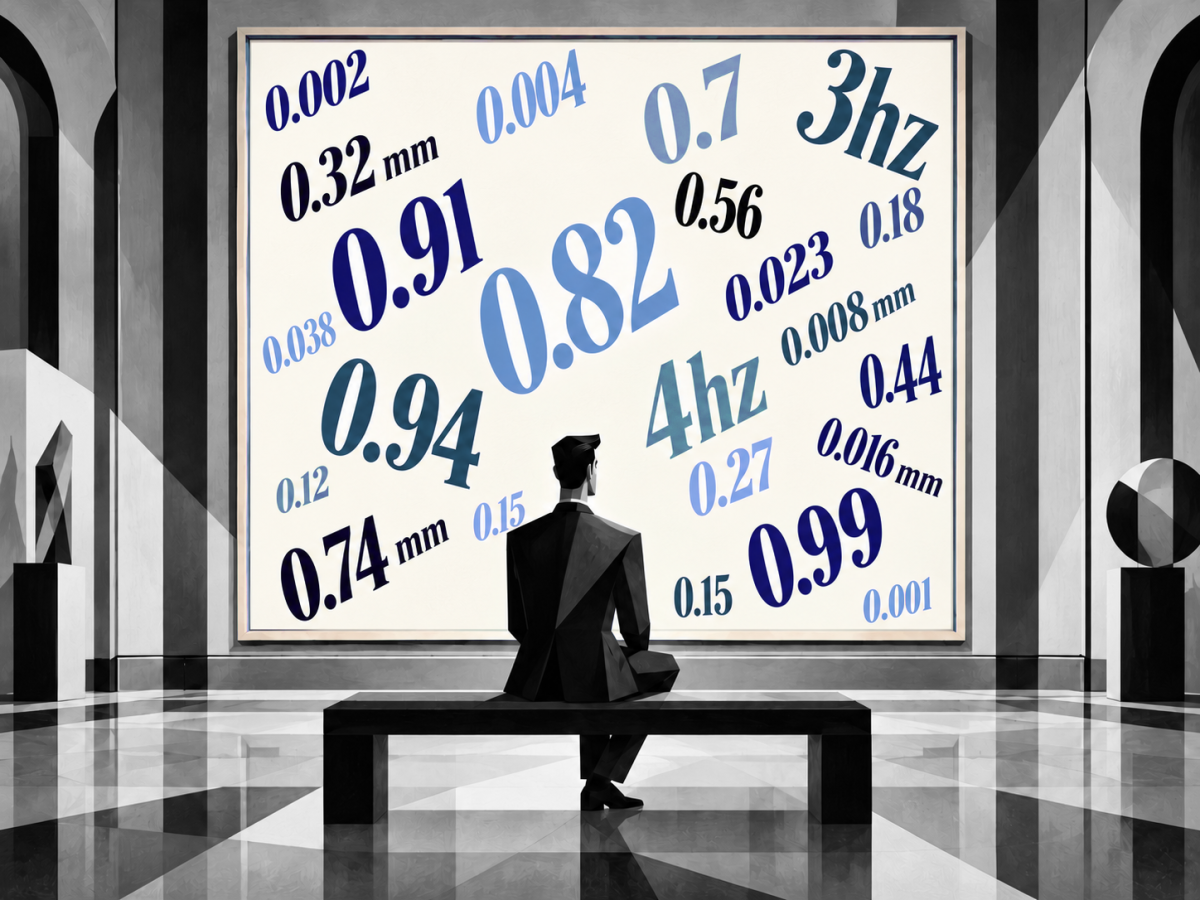
This distinction becomes obvious in the language used to describe watches. Movement analysis can be extraordinarily exact, while design commentary often collapses into a handful of adjectives that seem to have survived because nobody has yet invented a machine capable of detecting vagueness. A watch is “clean,” “sporty,” “balanced,” “timeless,” or “architectural,” and the discussion moves on as though something substantial has been said.
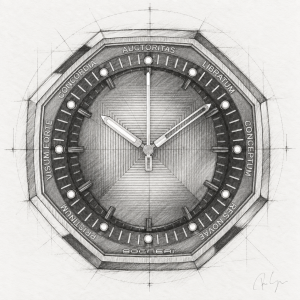
Serious design analysis requires more than reaction. A dial is not balanced because it produces a pleasant sensation; balance emerges from scale, spacing, hierarchy, negative space, and the distribution of visual weight. A case does not feel elegant by chance; elegance is produced through proportion, curvature, thickness, surface treatment, and the relationship between the object and the wrist.
Let’s not forget about meaning and purpose, which are possibly the hardest to recognize, evaluate, and therefore judge.
Design literacy therefore means understanding those relationships and seeing the watch as a system rather than a collection of features. It also requires knowledge beyond horology itself, because industrial design, architecture, graphic design, typography, sculpture, ergonomics, and material culture all contribute to understanding why objects work visually and physically.
No one needs to become an academic specialist in every discipline, but pretending that these fields are irrelevant simply because the subject happens to be a watch produces predictable results. We end up with brilliant explanations of the movement and remarkably thin explanations of the object surrounding it. Some may state that this gap is conveniently held to conceal design ignorance.
The irony is that the owner experiences the designed object constantly while interacting with the movement only indirectly. The wearer notices the proportions, the dial, the crown, the bracelet, the weight, the legibility, and the way the watch occupies the wrist, all of which belong to the domain of design.
The movement explains how the watch functions, while design explains how that function becomes experience. A mature culture of horology should therefore celebrate technical expertise without allowing it to impersonate something else, because understanding only the mechanism while ignoring the form is not comprehensive expertise but expertise with selective vision.